ADVANCED ENDOSCOPIC SPINE CARE
Endoscopic spine surgery.
With Nick Nenadovich, M.D.
Explore how endoscopic spine surgery works, who may be a candidate, and what to discuss with Dr. Nick Nenadovich, a board-certified, fellowship-trained spine surgeon in Northwest Indiana.

Orthopedic surgeon
In spine surgery
Small access points
THE EXPERTISE BEHIND YOUR CARE
Spine surgery training.
Endoscopic care.
- Orthopedic surgery residency
- The University of Chicago Hospitals
- Spinal surgery fellowship
- SUNY Upstate Medical University
- Board certification
- American Board of Orthopaedic Surgery
MEET DR. NENADOVICH
Nick Nenadovich, M.D.
Board-certified orthopedic surgeon
Fellowship-trained in spine surgery
Dr. Nenadovich specializes in conditions of the back, neck, and spine. Treatment options may include endoscopic and minimally invasive spine surgery.
He reviews your symptoms and imaging with you, then discusses the options that fit your condition, goals, and health.
HOW ENDOSCOPIC SURGERY WORKS
A smaller route
to the spine.
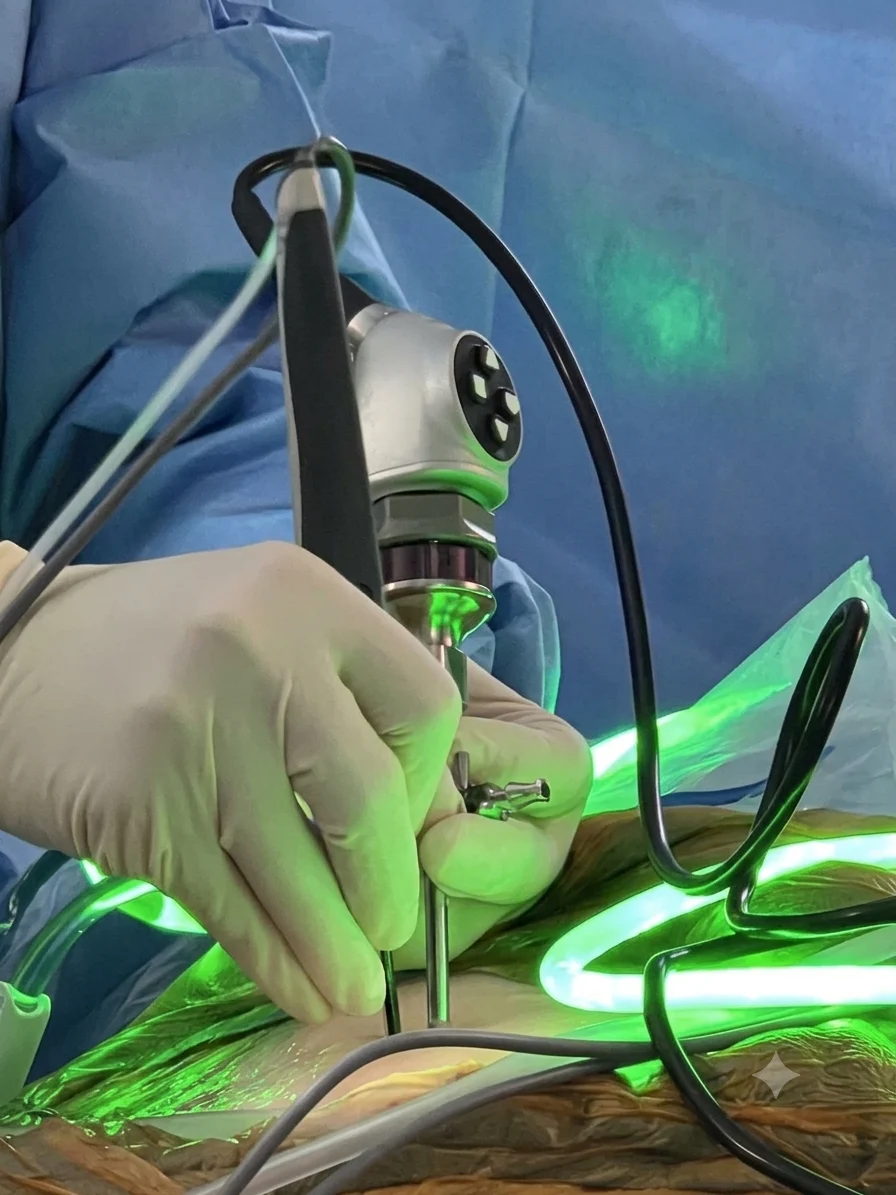
Dr. Nenadovich uses a small endoscopic access point to reach the treatment area. The instruments pass through that point, which may limit disruption to surrounding muscle and tissue. For some appropriately selected patients, this may allow a same-day return home.
Some endoscopic procedures use one incision of about 1 cm or two incisions of about 7 mm. The size and number depend on the procedure and your anatomy. A high-definition camera helps the surgeon see the treatment area.
HOW ACCESS HAS CHANGED
Compare two ways
to reach the spine.
Newer optics and instruments can give selected patients a smaller route to the treatment area.
Compare the access points.
Move the pencil along the scale to compare the two incision sizes.
Open access
- May involve more postoperative discomfort
- May require a hospital stay
Minimally invasive endoscopic
- Smaller access through muscle
- Same-day discharge may be possible
THE ENDOSCOPIC ADVANTAGE
A smaller approach,
when appropriate.
For selected patients, the approach uses small access points and specialized instruments to reach the treatment area.

The instruments enter through small access points, which may limit disruption to surrounding muscle and tissue.
Your surgeon will explain when you can return to normal activities and work.
A smaller approach may mean less blood loss and may lower the risk of some complications, including infection.
The goal is to relieve symptoms and help you return to the activities you value.
- May reduce postoperative discomfort
- Pain management is tailored to you
- May be performed in an outpatient setting
- Recovery timeline depends on the procedure and your health
- Your surgeon will review infection risk for the procedure recommended for you
Individual results vary. Not every patient is a candidate for an endoscopic approach.
A CLOSER LOOK
See how
the approach works.
Watch a real procedure to see how the endoscope and specialized instruments are used in Dr. Nenadovich’s endoscopic approach.
Educational video availableExplore common questionsUNDERSTANDING YOUR OPTIONS
Learn what your options
may include.
Every spine is different. Learn about common reasons for an evaluation and procedures your surgeon may discuss.
COMMON CONDITIONS
Spinal condition navigator
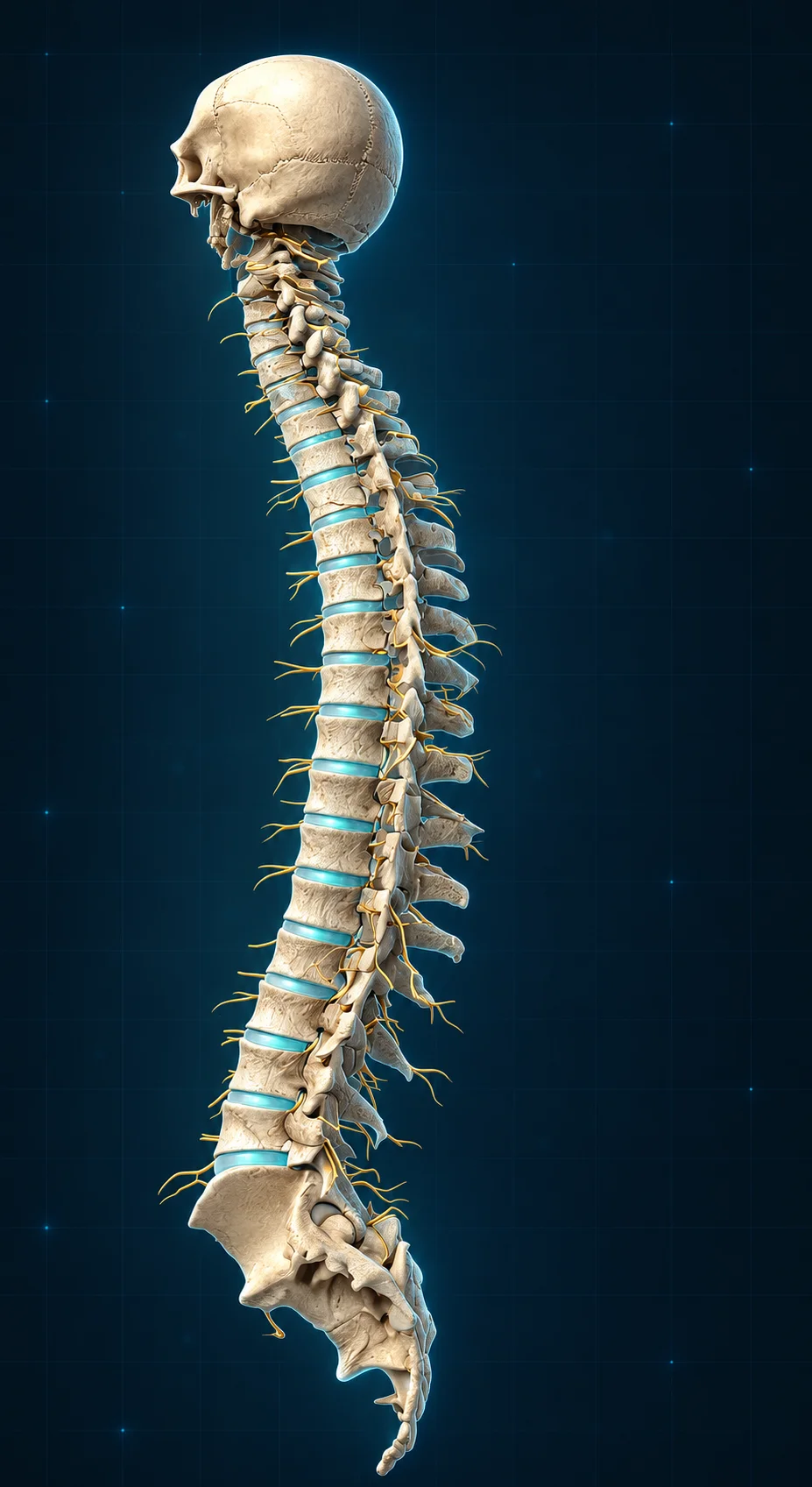
Hover a conditionTap a condition to see where it commonly occurs along the spine.
 L4–L5
When disc material irritates or presses on a nerve, an endoscopic discectomy may be considered to remove the portion causing pressure.
Narrowing around spinal nerves may cause pain or limit activity. Decompression creates more room for affected nerves.
For certain conditions, your surgeon may discuss fusion to join vertebrae and improve stability as part of a broader treatment plan.
Endoscopic surgery is one option. Your care plan may include nonsurgical treatment or a different surgical approach.
WHAT HAPPENS NEXT
Three steps to discuss
your care.
Start with a question, review your options, and decide how to proceed.
Start with a question
Call the Endoscopic Concierge to discuss your questions and decide whether an evaluation makes sense for you.
Talk with the Endoscopic ConciergeReview your options
Meet with Dr. Nenadovich to discuss your symptoms, imaging, and possible treatment approaches.
Make a plan
Discuss benefits, risks, alternatives, and recovery expectations before deciding how to proceed.
COMMON QUESTIONS
Questions about
endoscopic surgery.
Find answers about candidacy, recovery, risks, and what to expect.
Talk with the Endoscopic ConciergeWhat is endoscopic spine surgery?+
Endoscopic spine surgery uses a small camera, called an endoscope, and specialized instruments to access the spine through a small incision. The camera gives the surgeon a magnified view of the treatment area.
Am I a candidate for an endoscopic procedure?+
Candidacy depends on your symptoms, examination, imaging, overall health, and previous treatment. A consultation helps determine whether an endoscopic procedure, another surgical approach, or nonsurgical care is appropriate for you.
Does every spine condition require surgery?+
No. Your care may begin with options such as physical therapy, medication, or injections. Surgery may be considered when symptoms persist and the source of your pain can be identified.
Will I go home the same day?+
Some patients are able to return home the day of surgery. Your procedure, health, and recovery after anesthesia determine whether outpatient care is appropriate. Your team will discuss the plan with you before surgery.
What should I expect during recovery?+
Recovery is individual. Your care team will provide instructions for incision care, activity, follow-up visits, and returning to work. The timeline depends on the procedure and your health; faster recovery is not guaranteed.
Are there risks with endoscopic spine surgery?+
All surgery carries risks, including infection, bleeding, nerve injury, complications from anesthesia, and symptoms that persist or return. Your surgeon will explain the benefits, risks, and alternatives for your specific situation.
READY TO TALK?
Questions about your options?
Let’s talk them through.
Call the Endoscopic Concierge to ask a question or arrange a consultation.